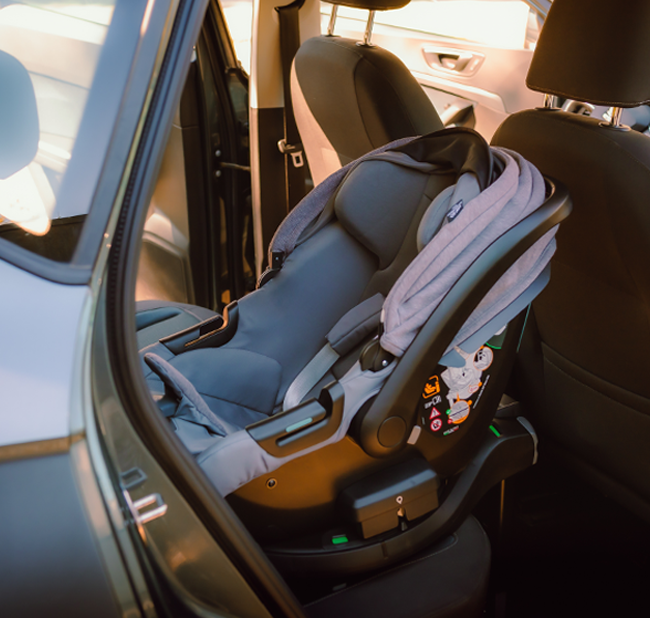
If you are an expectant parent you already know the pressure to find the best-of-the-best crib, stroller, mattress, sheets…the list could go on. Henry Community Health wants to take pressure off of you when it comes to picking the most important piece of baby equipment, the car seat.
Car seats come in many different sizes, styles, and price ranges, keep reading to find out the 7 things you should look for as you begin to start shopping for your baby’s first car seat!
#1 – Reputable retailer
Any car seat you purchase should be from a reputable retailer. Buying from a reputable retailer doesn’t mean expensive, it means it’s safe. With the surge of online discount retailers, there has been an increase in online retailers selling car seats that do not meet the US federal regulations and safety standards.
Do your research and stick to brands/retailers that you know, are familiar with, and clearly meet regulations.
#2 – Instruction manual
Ensure the car seat you choose has an instruction manual. This document will contain all the specific standards for your seat, such as proper installation instructions, max weight and height requirements, and fit guides to help you know when your infant can be forward facing.
Additionally, the instruction manual usually includes a car seat registration form. Submitting this form ensures you receive up-to-date information on any car seat recalls or safety issues related to your child’s seat. In the event you cannot locate this form within your instruction manual, you can easily find the car seat registration form for many brands at https://www.nhtsa.gov/vehicle-safety/car-seats-and-booster-seats#registration
#3 – 5-point safety harness
A 5-point safety harness is where there is one strap for each shoulder, one for each thigh, and one between your baby’s legs. Safe in the Seat states that a 5-point harness ensures that “in the event of a crash, the harness restrains the child and absorbs some impact energy, making it one of the most effective safety tools when properly buckled”.
#4 – Easy adjustments
Not all car seats are made the same, some are made for infants ages 0 to 12 months, while others can support your child over the years. Avoid infant car seats that make it hard to adjust the straps and harness as your baby grows. Additionally, if it’s important to you and your family, consider choosing a convertible car seat that grows with your baby from rear-facing to front-facing.
Always consult your instruction manual on how to adjust your child’s car seat based on their weight and height.
#5 – LATCH system
A LATCH system refers to the Lower Anchors and Tethers for Children located within your vehicle. This technology allows you to securely attach the car seat or car seat base to a vehicle equipped with LATCH anchors. While LATCH anchors are standard in newer vehicles, be sure to check if your vehicle has them. If not, no need to worry, car seats are just as safe when securely and correctly installed with the seat belt.
#6 – Car seat base
When choosing a car seat, consider if a car seat with a base is the right choice for you and your family. This type of car seat allows you to keep a base secured in your vehicle at all times similar to a standard car seat, but allows you to quickly click and unclick the seat for convenient travel and often easily transition into items such as a stroller.
#7 – Side-impact protection
Some car seats have energy-absorbing foam and other features for better protection in a side-impact accident. According to Safe in the Seat, these parts are often plastic, metal, and foam that are built into the seat or an additional piece you may need to adjust. You can often identify these additional features in the description section of the car seat listing.
Henry Community Health OB/GYN is here to help guide you on your maternity journey inside of the office and out. If you have any additional questions about car seat safety, please reach out to our Maternity Navigator at 765-521-1397, or by email at maternitynavigator@hcmhcares.org.